
Available on backorder
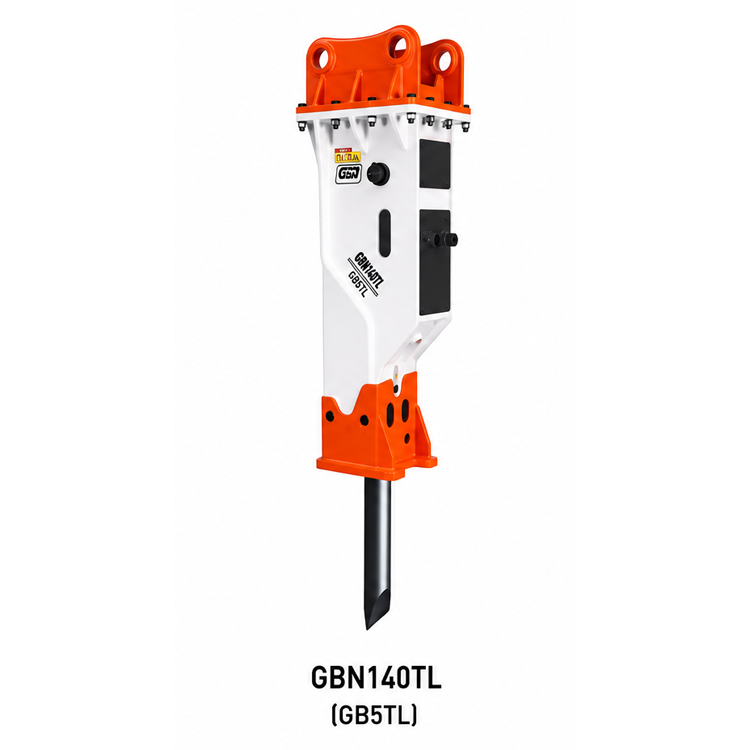
The GBN140TL Hydraulic Breaker is a heavy-duty, silenced T-Series breaker designed for 10–17 tonne excavators. Built for demanding demolition, concrete breaking, rock, and construction applications, it delivers powerful and consistent impact performance while helping reduce noise and vibration. Supplied with chisel and moil tools, hoses, couplers, and an excavator-specific hitch bracket, it offers a complete, ready-to-work solution for professional operators.
£8,606.00 +20% VAT (£10,327.20)
Available on backorder
£8,606.00 +20% VAT (£10,327.20)
The GBN140TL hydraulic breaker is a heavy-duty T-Series breaker engineered for demanding excavation, construction, demolition, concrete, rock, and general breaking applications. With a 890 kg silenced operating weight and a 100 mm tool, the GBN140TL is designed for excavators in the 10–17 ton range, with approximately 14 tons listed as the suitable operating class.
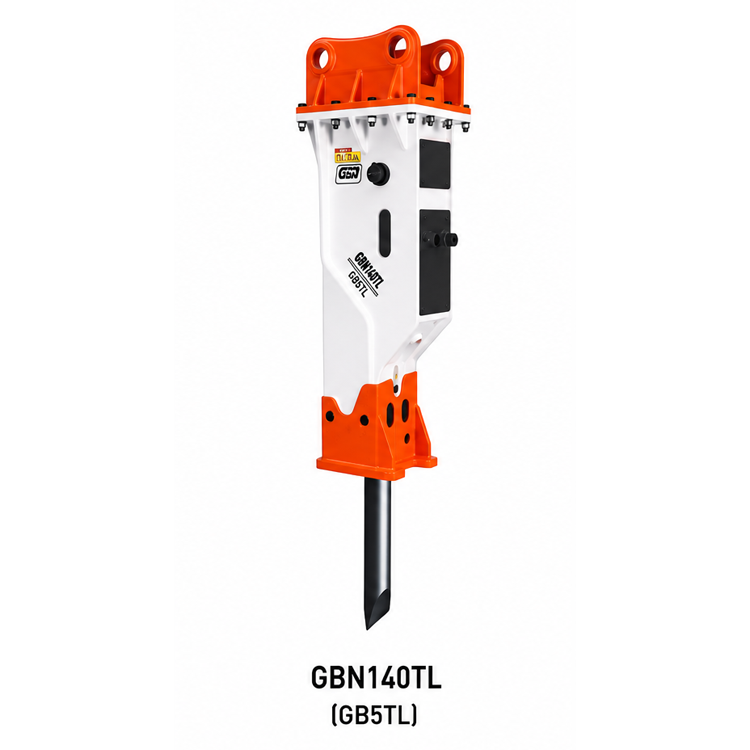
The GBN140TL is built for contractors who need a powerful hydraulic breaker for larger excavators and demanding jobsite conditions. Its 100 mm moil-type tool is designed to deliver dependable penetration and breaking performance across a wide range of hard materials.
With a 890 kg (1,962 lb) silenced operating weight, the GBN140TL provides a substantial attachment package for excavators from 10 to 17 tons. The manufacturer's suitable operating class is 14 tons.
The breaker produces an impact rate of 450–780 blows per minute, providing a balance between impact frequency and breaking force for demanding construction and excavation applications.
The GBN140TL requires a hydraulic oil flow of 85–110 L/min and operates at a breaker pressure range of 150–170 bar. Hydraulic flow and pressure should be matched correctly to the carrier excavator before installation.
The GBN140TL is equipped with a robust T-Series design intended for heavy-duty service. Its larger 100 mm tool and heavy operating weight make it suitable for demanding concrete, rock, demolition, trenching, and general excavation applications.
Optional equipment includes an automatic grease system, underwater system, and anti-blank-firing system. These options can help adapt the breaker to specialized operating conditions and improve protection during demanding work.
Designed for demanding demolition projects where larger excavators require a powerful hydraulic breaker capable of handling heavy structural materials.
The 100 mm tool and heavy-duty breaker configuration make the GBN140TL suitable for concrete, masonry, foundations, structural materials, and construction breaking.
Suitable for rock breaking, hard material reduction, excavation, trenching, quarry-related work, and demanding site preparation applications.
Designed for excavators in the 10–17 ton range, with approximately 14 tons listed as the suitable operating class.
| Specification | GBN140TL |
|---|---|
| Series | T-Series |
| Breaker Model | GBN140TL |
| Configuration | Silenced |
| Operating Weight – Silenced (Tool + Machine) | 890 kg / 1,962 lb |
| Operating Weight – Open Top | 850 kg / 1,874 lb |
| Tool Type | Moil |
| Tool Weight | 59 kg |
| Tool Diameter | 100 mm |
| Operating Pressure – Breaker | 150–170 bar / 2,175–2,465 psi |
| Setting Pressure – Machine | 200 bar / 2,900 psi |
| Impact Rate | 450–780 bpm |
| Accumulator Pressure | None – No Accumulator |
| Back Head Pressure (N2 Gas) | 16 bar / 232 psi |
| Required Oil Flow | 85–110 L/min / 22.4–29.0 GPM |
| Minimum Excavator Size | 10 tons |
| Maximum Excavator Size | 17 tons |
| Recommended / Suitable Excavator Class | 14 tons |
| Automatic Grease System | Available Option |
| Underwater System | Available Option |
| Anti-Blank-Firing System | Available Option |
Important: Hydraulic flow and pressure requirements should be verified against the excavator manufacturer's specifications before installation. Actual attachment operating conditions may vary depending on the carrier machine, hydraulic system, tooling, and application. Automatic greasing, underwater operation, and anti-blank-firing protection require the appropriate optional configuration and should be used according to the manufacturer's operating requirements.